Autor: orbitalyx

Straight from SmallSat: Smart Kids, New Allies, Rookie Glory

aka What Orbitalyx Did in Utah (Besides Collecting Space Swag, Dinosaurs, and Fossils)

Judging the Frank J. Redd Student Competition

ORBITALYX CEO Daniela Jović was invited to serve as a judge at the Frank J. Redd Student Competition. The competition is a cornerstone of SmallSat, showcasing outstanding student research and innovation. Congratulations to all winners and participants. Special thanks go to Stanley Kennedy, the Frank J. Redd Student Competition Technical Chairman, and the whole team, for their continued dedication.

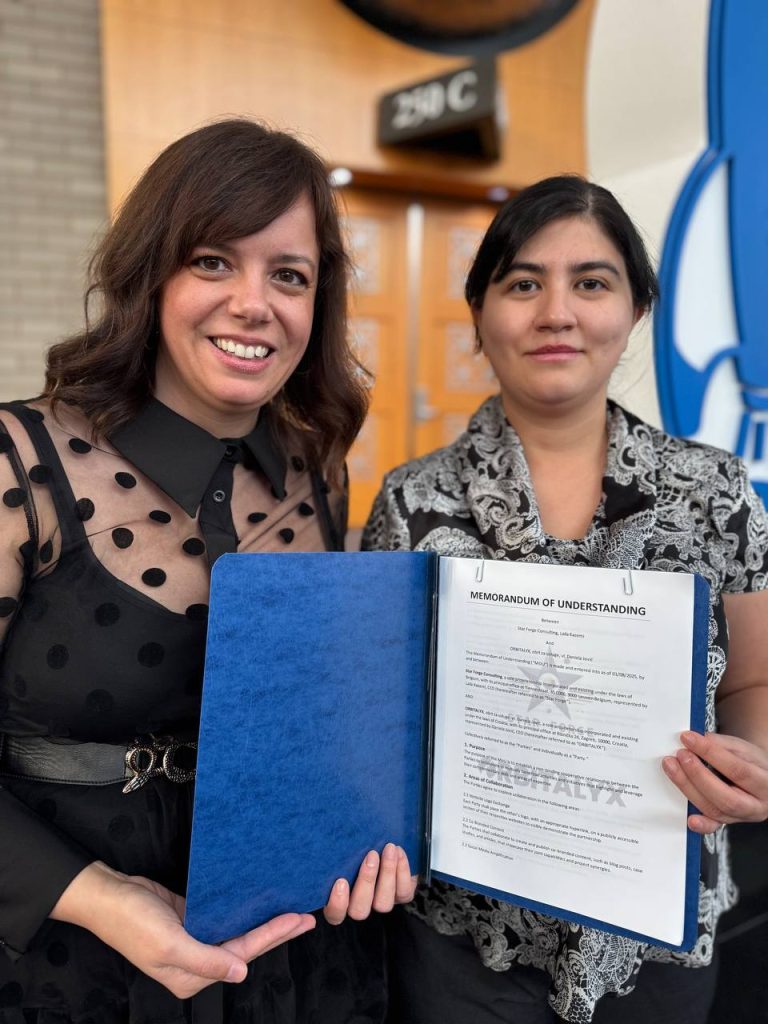
MoU signed with Star Forge

During the conference, ORBITALYX signed a Memorandum of Understanding with Star Forge, led by Laila Kazemi. Star Forge is a deep-tech company delivering products and services in positioning and navigation for both space and terrestrial applications. Their expertise spans:

  • Space optical navigation and attitude estimation
  • Vision-based sensing for spacecraft systems
  • Multi-sensor navigation and estimation architectures
  • Algorithm development for relative navigation, feature tracking, and pose estimation
  • Support from concept design through hardware-in-the-loop testing and flight qualification

Together, ORBITALYX and Star Forge will explore collaborative projects that combine complementary skill sets for advanced mission support.

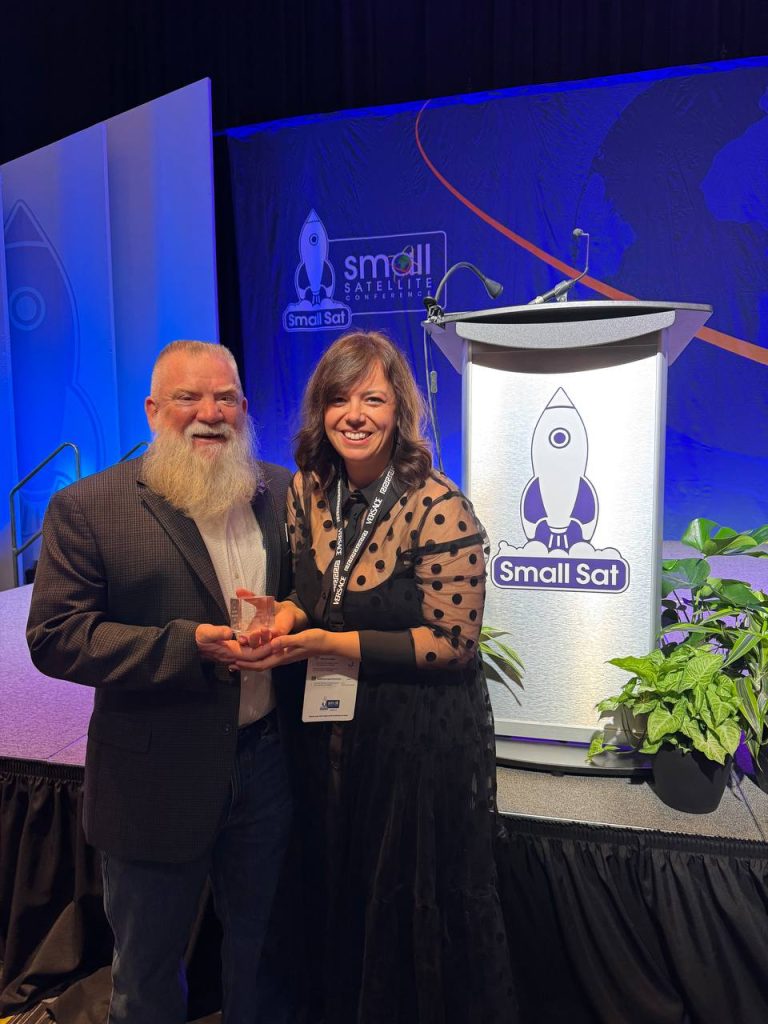
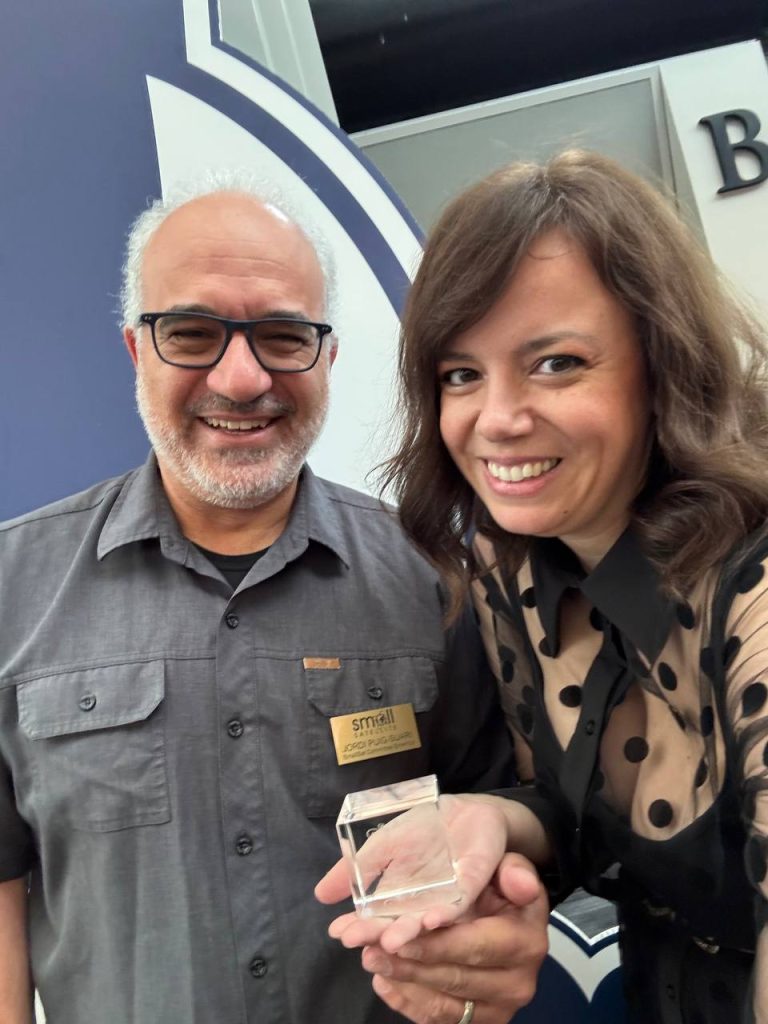
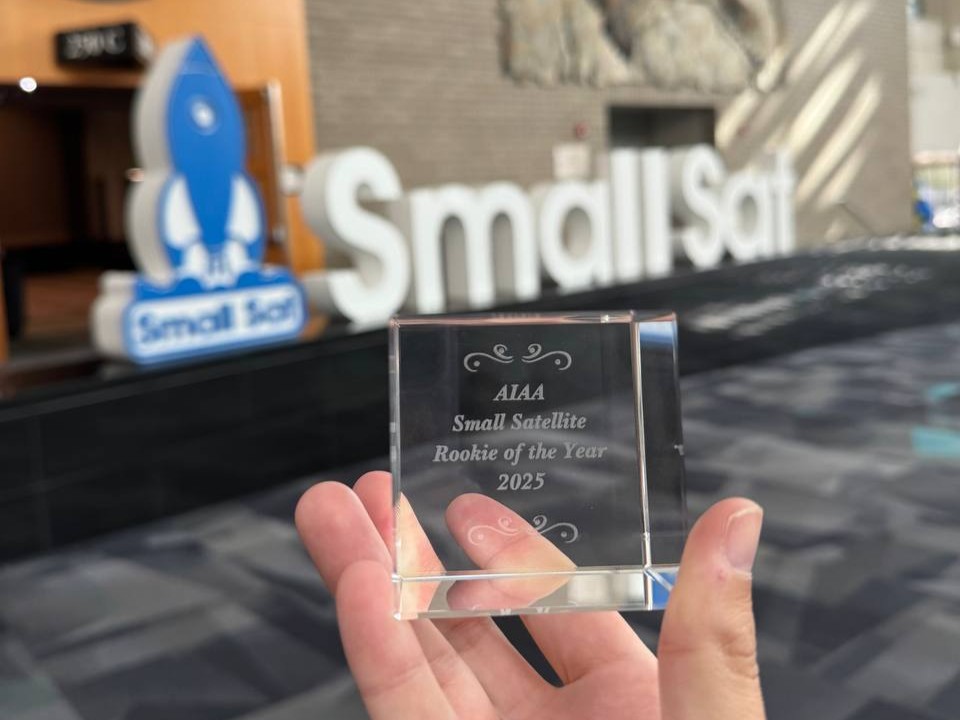
CroCube receives Rookie of the Year Award

The Croatian satellite CroCube, developed by Spacemanic, EVO, and volunteers, received the Rookie of the Year Award at SmallSat. CroCube has been in orbit since December 2024, transmitting images and engaging the public through its dedicated mobile application. It marks the most significant space achievement in Croatia to date, and ORBITALYX is proud to have been part of this milestone.

Stay connected with ORBITALYX

We continue to build bridges across the NewSpace ecosystem. If you are looking for collaboration opportunities or want to learn more about our work, get in touch with us.

Posting this blog totally counts as content, right? (*asking for a friend…)

Running a business as a creative freelancer: designer, strategist, content creator, illustrator, or space-savvy consultant – often means pouring your energy into client missions. You give them the best visuals, the sharpest messaging, the cleanest strategy. Projects move. Clients are happy. But when did I last wash my hair?

And what is left for you?

The classic freelancer dilemma: By the time you have given your best thinking to others, do you have anything left for your own brand?

My parents asked me, half-joking: “Do you ever have anything left in you for your own stuff?” If I had a euro for every time I heard that, I would have enough to pay the person now managing my Instagram. I work in communication but ghost my own feed. The only thing consistent about my posts is how consistently they do not happen. Classic shoemaker’s kid situation.

The Burnout Loop

You are not lazy. You are not stuck. You are just tired. After solving other people’s problems all week, there is rarely enough creative fuel left to redesign your portfolio, fix your website, or even write that one clever LinkedIn post you have had in mind since February.

Why It Matters

Neglecting your own business does not mean you are lazy – it usually means you are busy, and that is a good thing. It means people are paying you to do great work. Still, it can be frustrating when your own online presence starts to look like it was last updated by your 2019 self. Because nothing says ‘thriving business’ like a portfolio that still lists a 2022 project as ‘coming soon.’

Some Do Not Even Try

Others know they will never “get to it” – so they skip it entirely. That is where collaboration steps in. Outsourcing your own brand work to someone who is not depleted by your client list can be the difference between looking busy and becoming booked.

What We Have Learned

We see it all the time – the sharpest minds with the blurriest brand presence. It is fixable.

Right now, I am part of a small creative loop where we produce content for each other. It is not polished, but it moves. And it works.

If this hits close to home, you are not alone. Just do not give up. Even if it is messy, start again tomorrow.


You do not need a perfect plan. You just need to keep showing up for yourself, even if it is with dry shampoo and a half-written post.

Unsubscribe Me from Your Conference Emails

…and the inbox spam they rode in on

The most beloved space conference of the year is just around the corner.
Small Satellite Conference. THE SMALLSAT.

Everyone’s going.
Everyone wants to be seen.
It’s the August hotspot for the space crowd.

And that means one thing: the pre-conference newsletter avalanche has begun.


Horrible Newsletters Ahead (and the Case for a No Newsletter Club)

It starts slowly.

A ping in your inbox.
Subject line: “Counting down to SmallSat 2025!”
You think: fine, okay. Excitement is building.

Then they all come.

“Visit us at Booth 789! (We have chocolate)”
“10 reasons to meet us in Utah”

“Meet our team. Please. Please.”
“Let’s connect!”
“Schedule a meeting!”
“Schedule a meeting again!”
“We’re revolutionizing the [placeholder] and bringing the AI-powered [placeholder] to redefine the space industry. Let’s talk.”

By the end of the week, your inbox looks like a promo graveyard. Forty-seven unread messages and a rising sense of dread.


The Problem Isn’t the Newsletters. It’s the… Newsletters.

There are two universal truths in space marketing:

  • Everyone wants visibility.
  • Everyone sends a newsletter right before a conference.

The result? A spam cyclone of identical formatting, smiling team headshots, and vague announcements like “we’ll be there” and “big things coming.”

At some point, you realize: nobody’s saying anything.
They’re just emailing it.


Enter: The No Newsletter Club

We propose a radical concept: don’t send a newsletter.
Print a sticker instead. Make a button. Get a badge.

Wear it like a defiant astronaut dodging debris in LEO:
“No Newsletter Club” – Ask me about it in person.

Instead of filling inboxes, fill conversations.
Instead of push notifications, build pull curiosity.
Instead of Mailchimp fatigue, how about a handwritten note, a dumb reel, a quirky bingo card, a cryptic post? Or, the ultimate rebellion, nothing at all.

Imagine the silence.
Imagine the peace.
Imagine actually looking forward to talking to someone because they did not email you three times in July.


Let’s Be Real

If you’re launching something groundbreaking, awesome.
But if your newsletter says:

  • “We’ll be there”
  • “Meet us at Booth XYZ”
  • “Our new platform is… coming soon”
    …you don’t need a newsletter. You need a hug.

So Join Us

We are the No Newsletter Club.
We stand for inbox respect, creative marketing, and the power of a well-timed meme.

See you at the conference.
In person.
Where actual conversations happen.

We promise not to email you about it.

Welcome to the HYPERBOLA ERA

Not the orbital kind, the linguistic one.

Somewhere between a pitch deck and a polished LinkedIn post, a strange inflation began. A company building its first cubesat is already a constellation provider. A sole component manufacturer is unlocking the full potential of satellites. A solo-founder with Canva and ChatGPT is now a global thought leader in space innovation.

The result? A space sector where it often feels like the payloads are light, but the promises are… planetary.


Micro Budget, Macro Claims

Let’s talk about the core theme of the Hyperbola Era: the disproportionate scale between what’s actually built and what’s being broadcast.

You have a 1U CubeSat? Congratulations. That doesn’t mean you’re redefining humanity’s access to space. It means you’ve taken a meaningful step – one worth celebrating – but not one that requires a 14-slide keynote on orbital sovereignty.

This isn’t a call for humility. It’s a call for accuracy.

Because while the VC world might tolerate buzzwords, engineering doesn’t. No amount of visionary phrasing will fix a failed radio link. You can’t pivot out of a tumbling satellite.

But in the age of ChatGPT, everyone can now write a vision statement so grand it belongs on a Mars colonization poster. Suddenly, we’re all accelerating orbital autonomy and leading space computing – even if what we really do is sell antennas.


The Redefinition Effect: What You Say vs What You Launch

Let’s break it down:

  • What you have: a prototype in thermal vacuum testing.
  • What your website says: “A next-generation platform enabling AI-driven edge computing in space.”
  • What you do: outsource cubesat integration and find rideshare slots.
  • What your pitch says: “We provide dedicated access to orbit via our proprietary launch solution.”

This widening gap is what I call the Redefinition Effect – because apparently, everyone is “redefining access to space,” “redefining propulsion,” or “redefining satellite architecture.”

And look, the temptation is real. Space IS sexy. There’s funding to chase, people at conferences to impress, and partners to win over. But credibility is becoming the rarest commodity in the NewSpace gold rush.


In Defense of the Builders

There’s a quiet crowd out there. The ones who are building things. They don’t post every day. They don’t slap “leader in NewSpace innovation” on their homepage. But they launch. They iterate. They debug.

They deliver.

And while the hyperbolic companies are out there dominating LinkedIn algorithms, the quiet ones are writing flight software, testing ADCS algorithms, or calling the ground station at 3 AM.


How Did We Get Here?

Three reasons:

  1. Social Media Rewards Hype – Platforms push content that makes bold, absolute claims. Subtlety doesn’t trend.
  2. Investors Scan, Not Read – You’ve got 3 seconds to look impressive in a deck. So “developing a telemetry system” becomes “pioneering in-space data autonomy.”
  3. FOMO Culture – If one startup calls themselves a ‘launch provider,’ others feel they need to match the tone or risk looking small.

So What Now?

This isn’t a purity test. No one’s expecting total modesty or radio silence. But we can ask for:

  • Realistic descriptions of services and capabilities
  • Transparent timelines (no, your satellite is not launching Q2 2025 if you haven’t picked a launcher yet)
  • Clear separation between vision and reality

Because credibility compounds. And when the market matures (and it will) people will remember who delivered and who just dazzled. Or maybe all this is just my wishful thinking.

Welcome to the Hyperbola Era.
Just make sure your next mission goes beyond the buzzwords and delivers something real.

One Sandwich Per Person

(*a short guide to how not to run conference catering)

There I was, standing in a queue of professionally dressed adults, each waiting patiently for our turn to receive one cold sandwich.
Just one. No seconds, unless there was food left.
A sad salad to the side, muffins if you wanted them. (And to be fair, muffins there were plenty.)

This was not a budget airline. It was a space conference. One that was supposed to be professional, relevant, and worth the price of entry.

And yet, the food situation felt more like survival training than hospitality.

Gone in 60 Seconds

At one point, the trays of sandwiches were cleared so fast it felt like watching a reenactment of an action movie. Were the staff starving too? Was someone monitoring leftover sandwiches to make sure no one went for a second one?

All I know is that when professionals, who paid for a full conference ticket, are rushing toward a tray of cold sandwiches, something has gone wrong.

No one expects Michelin-star dining at a conference. But offering one sad, rationed sandwich and calling it a “lunch break” is not it. You are not just feeding people, you are setting the tone for the entire event.

Should You Even Offer Food?

This is a serious question.

If the choice is between:

  • Standing in line for 20 minutes for a cold sandwich
    or
  • Buying my own hot meal from a restaurant nearby

Then let me opt out of the ration queue.
Take the €30 off the ticket price and let me handle my own lunch.

The worst part? There was dinner, yes, but again, cold.
No warm food. No meaningful hospitality. Not even the feeling of being looked after.

Hungry People Do Not Network

Here is the thing: hungry people are not happy people.
They are distracted. Irritable. Counting the minutes until they can sneak off and find something edible.
You can have the best speaker lineup in the world, but if attendees are dehydrated and underfed, it all falls flat.

Food is not just about calories. It is about care, energy, and experience. It is a powerful part of event design.

The Basics Are Not Optional

If your attendees are standing, juggling plates, and pretending it is fine. It is not fine.

Feed them well. Give them space to sit. Offer something warm. Make the food part of the experience, not a logistical failure.

It is shocking how many events in this industry still treat catering as an afterthought. In a sector that prides itself on precision, can we apply the same to the lunch queue?

Final Thought

If you want your attendees to stay alert, network, and remember your event fondly, start by not starving them.

One sandwich per person is not logistics.
It is a metaphor for everything else that is broken.

How Helium-3 Broke My Heart

Remember when we were told the Moon was full of Helium-3 and we were all going to get rich, solve the energy crisis, and casually power the planet from a lunar mining rig? It was clean, limitless, and just waiting to be scooped up. A perfect plan. Except it was not.

The Economic Illusion

Let’s be clear. This is not about physics or what is technically possible on a whiteboard. This is about the space industry’s ongoing addiction to hype without a business plan.

Helium-3 does exist on the Moon. There are studies. There are theoretical use cases. Some people even made spreadsheets showing dramatic long-term profits. But here is the part that often gets ignored. There is no current market. There is no customer. And there is no business case that stands up to basic commercial logic.

You would need to build, launch, and operate a completely new lunar mining ecosystem. Then figure out how to process and transport a niche material that has no real buyer. All of this with no working system on Earth that can even use the product.

So what are we doing this for? A pitch deck? A headline? A podcast appearance?

The Real Problem

This is not just about Helium-3. This is about a wider pattern in the space industry where people pitch billion-euro dreams without stopping to ask the most basic question: is this a real business?

At ORBITALYX, we work with companies on branding, storytelling, and business development. And what we see too often is this: a team with no traction building a brand around a future that does not exist.

There is a difference between vision and fantasy. Real innovation solves real problems for real people. It creates value. It has a customer. It can survive a funding round, a launch delay, and still deliver.

What the space industry does not need is another moonshot built entirely on vibes and optimism.

Can we please bring back common sense?
Not everything with a PowerPoint and a dream is a business.
Helium-3 may be exciting science, but it is not a business yet.
Until it is, we should focus on solving real, immediate problems.

The Signature Obsession

Yes, it is real. Germany has a law that dictates what must appear in your email signature.

Not just your name or company.
We are talking about:

  • Court register details
  • Registered address
  • Managing directors
  • Registration number

Miss one? That is a fine of up to €5,000 per email.

And here is the kicker: the things people love to cram into email footers — privacy statements, confidentiality disclaimers, liability noticescarry no legal weight under German law.
They are just digital clutter. §35a of the German Commercial Code outlines what matters, and these self-made disclaimers are not on the list. They do not protect you. They do not count.

But this blog is not really about email.

It is about the mindset that is holding Europe back.

Here is the real issue:

While startups in the United States pitch payloads on napkins and raise seed rounds in days, European founders are wasting time cross-checking if their email footer complies with §35a of the German Commercial Code.

While the NewSpace industry thrives on iteration, clarity, and velocity, Europe is still tangled in rules built for 20th-century commerce.

And ESA is not helping.

Getting through a single ESA application feels like a paper maze.
You do not need ambition — you need an Excel wizard, a procurement specialist, and the patience of a saint.

Milestone reviews. Endless forms. Language like you are applying for a Cold War subsidy.
All while startups elsewhere receive rapid funding, real mentorship, and the freedom to fail, pivot, and relaunch.

ESA claims to support NewSpace — but the process is still deeply rooted in oldspace thinking. Slow, hierarchical, paperwork-heavy.
No wonder some of the boldest European space startups go private, leave Europe, or skip ESA entirely.

And that is how we fall behind.

We lose time to systems that reward formatting over speed.
We lose teams to ecosystems that believe in trust over control.
We lose momentum while others are already orbiting.

Europe has talent, brains, and bold ideas. But they will not launch if we keep regulating like it is 1999.

Because while we are stuck editing disclaimers,
others are flying.

Productive Days in Slovakia: Reflections on Výťah Conference 2025

Last week was exciting and productive, as Orbitalyx joined the vibrant scene at Výťah Conference in Slovakia — a growing event focused on innovation, technology, security, and the future of Europe.

The week was even more dynamic with the chance to return as a guest on a podcast Slnečná Zostava. In a lively conversation, we explored everything from rocket launchers and spaceflight to pop culture and space tourism — including a lighthearted discussion on Katy Perry and Blue Origin flights! (You can check out the full episode here).

Výťah Conference was a perfect platform to reconnect with familiar faces and forge new connections across the space and tech industries. The organization was flawless, and the discussions ranged from the pressing need for European autonomy in space to the role of NATO, the commercial space sector, and the importance of future-proofing Europe’s sovereignty through innovation.

Beyond the conference stage, conversations with peers confirmed one thing:
Space is no longer just about exploration — it is about strategy, security, and Europe’s future role on the global stage.

At Orbitalyx, we are proud to be part of this dynamic conversation and to contribute to shaping a more resilient, accessible, and innovative space ecosystem for Europe.

Now, as the next events line up, there is only one real question left:
Will there be time to unpack, or is it straight to the next launchpad?

Great Missions Die on Bad Slides

And bad slides are not part of the future we’re building.
We’re in the business of launching satellites, building constellations, deploying advanced sensors, and reshaping how Earth connects to space. So why are so many deep tech presentations stuck in the past?

Text-heavy slides. Tiny fonts. Complex graphs with no context. No visual story.
You know the ones. Everyone tunes out. And that’s a problem.

Deep tech is already complex. Don’t make it harder to grasp with slides that look like a Word document in disguise.

Let’s raise the bar

In NewSpace, everything we do is about clarity, agility, and impact. Your slides should follow the same rules. Think of them as your visual spacecraft — if they’re clunky, slow, or uninspiring, they’ll never reach orbit.

Here’s the mindset shift:
Slides are not your notes.
Slides are not your script.
Slides are a visual layer of your message.

We recommend going for the 80–20 rule:

  • 80 percent visual, whether it’s a sharp image, a looping video, a branded animation, or a simple diagram with actual meaning.
  • 20 percent text, ideally less. One key message. Big font. No paragraphs. No tiny labels. No reading aloud. If it’s not visible from the back row, it doesn’t belong on the slide.

People remember what they see. Not what you read to them off a bullet list.

Don’t blame PowerPoint

There are no excuses. Tools like Canva, Pitch, Tome, and even Figma make it ridiculously easy to design sleek slides without a design degree. They offer free templates that look ten times better than the average industry deck.

Just like bad booths, bad slides aren’t forgivable

We said it in our last blog — a boring booth is a missed opportunity. The same goes for slides. You’re representing a company that might be sending hardware into orbit, shaping policy, or redefining connectivity. That kind of work deserves clean, clear, modern storytelling.

This industry is fast-moving, design-forward, and future-facing. Your slides should be too.


Follow Orbitalyx on Linkedin, or drop us a message.

The Booth Problem (and the Dead Fish Handshake)

Let’s Talk About Booths

If you’ve been to a space industry event, you’ve seen them.

The booth with a sad pop-up banner. A lonely bowl of hard candies. A staff member scrolling through their phone, avoiding eye contact. Maybe there’s a fishbowl on the table labeled “Drop your card to win a prize,” positioned as “lead generation.”

That’s not representation. That’s a missed opportunity.

And in today’s space industry—an ecosystem built on partnerships, trust, and human connection—that kind of booth presence does more harm than good.

A Booth Is Your Temporary Embassy

Let’s be clear: a booth is not just a corner of the expo floor with your logo on it. It’s your temporary embassy.

It speaks before you do. It shows whether you take the industry seriously, whether you want to be approached, and whether you value the opportunity to connect.

When someone walks by and sees a team that looks bored, distracted, or disengaged, they won’t stop. And they won’t remember you. Except maybe as “that booth.”

Worse yet? The dead fish handshake—the cold, indifferent, barely-there grip that says, “Please move along.” When that’s someone’s first impression of your company, you’ve already lost the moment.

It’s Not About the Budget. It’s About the People.

Plenty of startups and smaller companies show up with basic booths. That’s totally fine. You don’t need the biggest structure or the flashiest screens.

But what you do need are the right people.

People who are:

  • Curious and open
  • Energized by meeting others
  • Clear communicators who understand what your company does
  • Confident enough to approach someone and say, “Hi, what brings you here?”

You can have a small table and a roll-up banner, but if the person behind it knows how to connect, that is all you need.

On the other hand, no budget in the world can save you from the impact of a bored, disengaged team.

What About the Business Card Raffle?

Let’s not throw the idea out completely.

A business card raffle can be a useful way to attract attention—but only if it’s part of a broader effort to create genuine interactions.

If someone drops a card and gets nothing but silence or a vague smile in return, there’s no value in that exchange. It’s just data with no connection.

Instead, use it as an icebreaker. Ask a question. Start a conversation. Learn something about the person handing over the card. Even a 30-second chat can lead to a meaningful follow-up after the event.

Raffles shouldn’t replace relationship-building. They should invite it.

So, Who Should You Send?

Not everyone is meant to be a booth representative. That’s okay.

What’s not okay is sending people who:

  • Don’t want to be there
  • Don’t understand your product or mission
  • Aren’t interested in talking to strangers
  • Hope no one stops to ask questions

Events are expensive. Travel, setup, registration, it all adds up. But the biggest cost is the opportunity you miss when you send the wrong people.

This Year, Don’t Just Show Up

The space industry is evolving fast. More players. More competition. More chances to stand out—or fade into the background.

This year, make a deliberate choice.

  • Be present.
  • Be approachable.
  • Be remembered.

Because no one ever built a mission—let alone a reputation—on a limp handshake and a free pen.